1/ Introduction to the Maine Coon
The Maine Coon is one of the most well-known domestic cat breeds in New England and most of the United States. These charming fluff balls are the hardiest and largest of all domestic cat breeds kept in Western homes. In addition to their beautiful appearance and gentle personality, their history is also quite mysterious!

Exclusive Maine Coon kittens T-shirt, available here

2/ Origins of the Maine Coon
Their origins are more popular tales and theories than proven facts. Some might even say they are the myths of the Maine Coon.
The Maine Coon, one of the indigenous cat breeds native to the United States, is known for having adapted to the harsh winters and wild natural environment of the state of Maine. The cold and distances between populations in Maine helped the Maine Coon to remain unmixed for hundreds of years.
This is mainly due to the small number of other cats in the region and is evidence of Darwin's theory of survival of the fittest. Unfortunately, not much is known about how they got there.
There are a few theories, some more fanciful than others. Others resemble science fiction due to genetic improbability. Yet, none of the theories have been proven and their mysterious origins have become part of the Maine Coon's strange feline charm.
Here are some of the well-known theories about the origins of the Maine Coon. It's up to you to choose the story you want to tell about your cat.

3/ The different theories about Maine Coons
A/ Maine Coon Cat and the wild animal theory
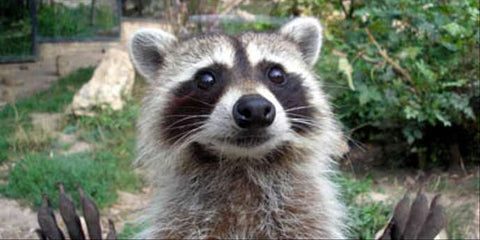
One of the most common theories about the Maine Coon's origin is that it is a hybrid. This origin theory has two general trends. The first is a domestic cat crossed with a raccoon. The other is a domestic cat crossed with a bobcat.
From the first theory (cat + raccoon), there is little possibility. Cats and raccoons are completely different species and cannot interbreed.

The second theory, crossing a female Maine Coon with a bobcat, may seem more likely but is not. Cats and bobcats both belong to the Felidae family but are not of the same species. The bobcat is of the Lynx genus, meaning it cannot breed with normal cats.
Even if the hybrid theory is genetically and scientifically impossible, when it comes to appearance and personality, things can get confusing.
The cat + raccoon theory also has some influence on the Maine Coon's name. Before it was called the Maine Coon, it was simply called "Maine cat." The addition of the second word, Coon, could come from the abbreviation of raccoon, or, as we will see later, from Captain Charles Coon.
This improbable theory has existed for hundreds of years but has no evidence.

B/ Ship's cats theory
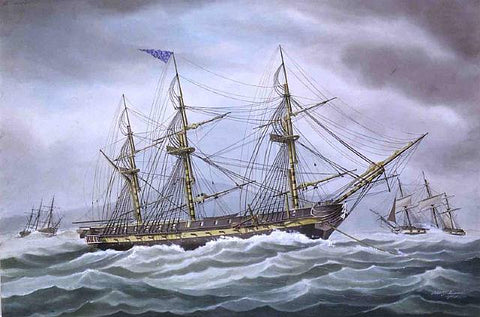
The strongest theory about the origin of Maine Coons is that they are descendants of European ship's cats.
Ship captains commonly kept cats on board to control mice and rats. This could wreak havoc on cargo and the internal workings of the ship. Some captains were so close to their long-haired cats that the kittens were very well cared for and maintained. Some seafaring families closely monitored their cat families, usually preserving the color strain for generations.
Two hundred years ago, the state of Maine was a common port for ships to drop anchor and undergo repairs, and for sailors to take a break ashore. Moreover, Maine was also very popular with shipbuilding companies. Many seafaring families settled in Maine's coastal towns, bringing their precious cats. Some captains also retired to the area, taking their beloved feline families with them.

These cats may have been one of the few European long-haired cat breeds. Long-haired Angora breeds are most often mentioned in relation to this theory. It is believed that these ship's cats would then become the beloved Maine Coon.
C/ Captain Charles Coon and his cats
Among the theories of ship cataclysms, one particular story seems to stand out from the others. In the 1800s, there was a ship captain named Charles Coon. Although his name fits the history of the Maine Coon cat very well, there is no evidence that this is not just another folk tale. The story of Captain Charles Coon and his long-haired cats could be the story of any captain, but this one is memorable.
When Captain Charles Coon came to drop anchor in ports along the New England coast, including Maine, his cats also came ashore. As the story goes, they mated with local wild cats. When long-haired kittens began appearing in litters all along the coast, they were called Coon's Cats because they closely resembled the captain's own cats.
Is the captain's name a coincidence, or did he really give his name to the feline breed? No one is entirely sure.

D/ The Maine Coon and Viking cats
Some Maine Coon theorists believe these furry creatures are descendants of Norwegian Forest cats. They may have traveled to the United States aboard Scandinavian ships for mouse control. Nordic explorers arrived in the United States long before other Europeans, and if this theory were true, Maine Coons would be a much older indigenous species.
Even though all ship cat theories seem highly probable, there is no concrete evidence of their existence, and the stories have become more folk tales than "real origin" stories. It really depends on which part of New England you are in. Each town will have its own story about the origin of the Maine Coon cat, most likely a version of one of those we mention here.

E/ Marie Antoinette and the Maine Coons
The most astonishing and interesting of all the myths about the Maine Coon cat's origin involves guillotines, big wigs, and a bit of cake.
In the era of French royalty and Marie Antoinette's extravagant tenure at Versailles, Turkish Angora and Persian cats were common pets. Sometimes, they were even considered invaders, due to how quickly they reproduced and took over homes. King Louis XVI reportedly used cats as hunting targets for amusement with his friends.
The story linking Angora cats to Maine Coon cats is the story of Marie Antoinette's near escape to the United States. When Marie Antoinette and her family were arrested at Versailles in 1793, her captain Samuel Clough and some of her sympathizers prepared an escape to the state of Maine.

At the docks, there was a ship anchored that regularly traveled the trade route between France and Maine. The plan was to get the family on board and take them to Maine, safely.
While Marie Antoinette and her family were incarcerated, the ship's captain and his sailors loaded the ship with royal furniture, royal wallpaper, the fanciest clothes, and, according to theorists, most likely a family of Angora cats. All rescue attempts failed, leading to the beheading of Louis XVI and then Marie Antoinette.
When the royal family was executed and disbanded, the ship commanded by Samuel Clough hastily left France and sailed to its intended destination in Maine. There, in the coastal town of Wiscasset, the captain's wife was waiting with a large house ready for her royal guests.
The immense mansion was furnished with all of Marie Antoinette's royal possessions and opulent decorations. This house is still standing and is known as the "Marie Antoinette House." It was once a museum, but it is now a private residence and cannot be visited.
This story of Marie Antoinette and her family's near survival is a proven fact, but what remains a mystery is the presence of Angora cats on Samuel Clough's ship. If Maine Coons are descendants of Marie Antoinette's royal Angora cats, it would be a beautiful story, but there is no real documented proof, only speculation.

Polydactyl Maine Coon kitten from Chatterie Coon Toujours.
F/ Polydactyl Maine Coon cats
A big part of the Maine Coon's history is the genetic trait of polydactyly. A polydactyl cat is a cat that has more toes than the regular amount on any of its paws. This is a trait that dates back to the earliest known Maine Coons. This trait is also hereditary. Most polydactyl Maine Coons will have polydactyl kittens, and this can last for generations.
Polydactyl paws are not a problem for cats and are fully functional. Historians believe this is a trait inherited from ship's cats who needed more balance and grip than land cats. This theory goes hand in hand with the Maine Coon's origin theory, as descendants of ship's cats.
The polydactyl trait of Maine Coons is particularly well-known in their history because it influenced their appearance and participation in cat shows. Moreover, it greatly influenced how they are carefully bred by the Maine Coon community.

3/ Your Maine Coon
If you own a Maine Coon, you should now know that your cat is very special. The history and origins of Maine Coons are so mysterious and speculative that it only makes them more intriguing. With their lynx-like ears, large paws, and ringed tails, these gentle giants can be the kings of your home. Their wild origins and weight require a sturdy cat tree.
When someone admires your Maine Coon, tell them one of the improbable stories of its origin. Start with the Scandinavian Vikings and Norwegian Forest cats, then end with Marie Antoinette and her royal Angora cats.
Maine Coon cats, these large cats, will always carry the secret of their origins.